State-of-the-Art Facility and Expertise
Our state-of-the-art facility specialising in pacemaker implantation, led by experts with over 20 years of experience in the procedure ensures high-quality patient care.
Skilled Approach for Minimal Complications
Experience a low rate of complications such as Infection, Hematoma, or Pacemaker Lead Dislodgement, with a rate of less than 0.5%.
Quick Recovery and Minimal Hospital Stay
Most patients benefit from shorter hospital stays and can go home on the third day after the procedure.
Pacemaker Implant in Mumbai at AHI
A Pacemaker is often used to treat an Abnormal Heart Rhythm, such as Bradycardia, where the heart beats too slowly. A Pacemaker can help regulate the heartbeat and prevent symptoms such as fainting, fatigue, and shortness of breath. A Pacemaker can also be used to treat Heart Block, a condition where the electrical signals that control the heartbeat are blocked or delayed. This can cause symptoms such as dizziness, fatigue, and fainting. A Pacemaker can significantly improve a patient’s quality of life by reducing symptoms and allowing them to perform everyday activities with more ease. At the Asian Heart Institute, our expert cardiologists and cardiothoracic surgeons in Mumbai perform pacemaker implant procedures with precision and care. The procedure to implant a Pacemaker typically takes around one to two hours and is performed under local anaesthesia. A small incision is made in the chest, and the Pacemaker leads are threaded through the veins to the heart. The Pacemaker is then implanted under the skin in the chest and connected to the leads.What is Pacemaker Implant Surgery
It is a minor surgical procedure to implant a small, battery-operated device, usually placed in the chest (just below the collarbone). This helps regulate the heart's rhythm by sending electrical impulses, ensuring it beats at a normal, steady pace. It is Also Known as- Pacemaker Insertion/Implantation
- Cardiac pacing device
- Permanent Pacemaker Implantation
- Artificial Cardiac Pacemaker
What Conditions Do Pacemakers Treat?
The best cardiac experts can recommend pacemaker implants in mumbai for the following conditions:- Certain heart arrhythmias (when electrical signals do not allow your heart to work properly).
- Malfunctions of the heart’s electrical system (such as heart blocks). Heart failure.
- Sick Sinus Syndrome.
- History of heart attack.
- Slow heartbeats (bradycardia).
- Certain congenital heart defects.
Signs That I Need Pacemaker Implant Surgery
The cardiologists at the best heart hospital in Mumbai will only decide if you need a pacemaker or not. They will identify heart conditions that will benefit from a pacemaker placement after assessing the risk-benefit ratio. Symptoms that could indicate pacemaker implant surgery in Mumbai include:- Extreme fatigue
- Dizziness or feeling lightheaded
- Unexplained fainting
- Mental confusion
- Pulse rate under 90
- Heart palpitations or fluttering sensations
- Muscle weakness in your arms and legs
- Shortness of breath, difficulty breathing or chest pains
What Are the Positive Effects of a Pacemaker?
When performed by the best cardiac surgeon in Mumbai, a pacemaker implant can provide the following benefits:- Improved Quality of Life
- Help Restore Normal Heart Rhythm
- Reduced the Associated Symptoms (Such as heartbeat, Extreme tiredness, Lightheadedness and Fainting)
- Help Avoid Future Life-Threatening Events
- Support Improved Longevity
- Lower the risk of Heart-related Emergencies and Hospitalization
How Many Types of Implanted Pacemakers Are There?
There are mainly 3 main types of traditional implanted pacemakers. Leadless pacemakers are the latest technology.- Single-Chamber Pacemaker (Uses one lead)
- Dual-Chamber Pacemaker (Uses two leads)
- Biventricular Pacemaker (Uses three leads)
- Leadless Pacemaker (A tiny, self-contained device introduced directly into the heart's lower-right chamber with the help of a catheter). There is no need for lead.
What Are the Steps for Pacemaker Implantation?
Here is the step-by-step breakdown:Pre-Surgery
- Fasting (8 hours)
- Review medications
- Blood tests, ECG, X-ray
Procedure
- Sedation and local anesthesia
- Small chest incision
- Vein accessed near collarbone
- Leads guided into heart
- Leads tested & secured
- Generator connected
- Device placed under skin
- Incision closed
After Surgery
- Recovery monitoring
- Same-day or overnight discharge
- Activity restrictions
- Follow-up checks
How Risky Is a Pacemaker Implant?
The pacemaker implantation is considered to be low risk. However, like any other procedure, it can carry risk:- Bleeding/Bruising
- Infection
- Collapsed Lung
- Blood Clots
- Device Malfunction (rare)
Why Choose Asian Heart Institute for Pacemaker Implant in Mumbai
Because of our following qualities:- Specialized cardiac expertise.
- Heart-friendly, skilled approach.
- Focus on quality of life.
- Experienced surgeons with fellowships in congenital and neonatal heart surgery handle complex cases.
- Successful 5,500+ complex surgeries.
- 24x7 Emergency, ambulance, and ICU services.
- Comprehensive and holistic postoperative support.
- Robotic-assisted options.
- 5,00,000+ patients treated.
- 99.83 % success rate.
Image Gallery


How to Prepare for this Procedure
The patient is typically admitted either on the same day as the procedure or the day before. They are required to fast for at least 5 hours before the procedure, and blood thinners are usually stopped 4 to 5 days before the procedure day.
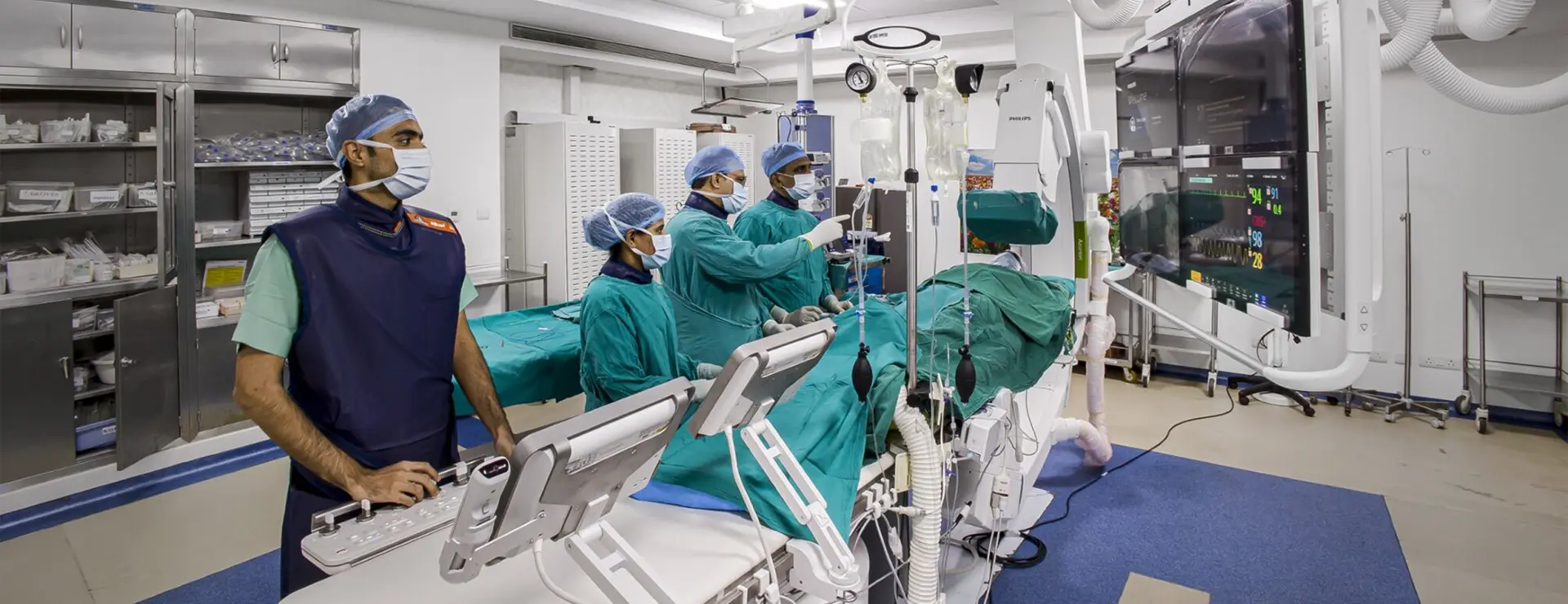
Typically, the patient remains conscious during the procedure as it is done under local anaesthesia, and the procedure time is around 2 hours. After the procedure, the patient is transferred to the ICU for 1 day and night of monitoring, and then mobilised and transferred to the ward the following day. Discharge occurs on the day after that.
The patient is typically able to remain mobile and take care of their daily needs, with minimal physical support from family members if needed, especially for elderly patients. However, emotional support from family members is crucial during the preoperative period.
After Pacemaker Implantation, patients are advised to avoid excessive movement of the upper limb on the same side as the Pacemaker (e.g., avoiding excessive movement of the left arm if the Pacemaker is implanted on the left side). The surgical site must remain dry for 7 to 10 days. Typically, patients are called back to the hospital for an outpatient department (OPD) visit after 7 to 10 days to assess the operated area and check the Pacemaker function. After that, patients are usually called for an OPD visit once every 6 months for ongoing monitoring.
10 to 15 years depending on the usage of the Pacemaker.
Yes, the patient can lead a normal life after the procedure. Patients can also engage themselves in various sports activities after discussing them with their doctor.
Yes. The Pacemaker interacts abnormally when in proximity to a strong electromagnetic field. So, avoid being near electromagnetic fields such as metal detectors, transformers etc. Let your doctor know that you have a Pacemaker. The Pacemaker needs to be programmed before some medical diagnostic procedures like MRI, EP study and RF Ablation, Surgeries requiring the use of Electrocautery etc. Most of the common diagnostic procedures like ECG, Echocardiogram, Ultra Sonographies, X-Ray tests, CT scan etc do not need prior Pacemaker programming.
In 2011, I thought it was the end of my active life. But after my Angioplasty, I started running marathons!

Harshad Sheth
Patient
Not sure how to get started?
We are here to help you. To start the process get in touch with our team to get your queries addressed. We get back to you soon to help to start your heart care journey with us.
Quick QueryOur Specialists
View All
Dr. Ramakanta Panda
Cardiac Surgeon, Founder & Chairman
We want to give patients the three most invaluable gifts of life - Hope, Healing and Happiness.
Know
Dr Tilak Suvarna
Cardiologist
At AHI, we never say no. It is our moral and ethical duty to do our best for patients.
Know
Dr. Asifa Shaikh
Assistant Medical Administrator
After every patient is healed, earning their trust is our highest reward and the most fulfilling.
Know